Maslow’s hierarchy has stood up remarkably well given its over seventy years old and was developed. The levels of maslow’s hierarchy of needs 1.

Maslow's Hierarchy of Needs Master Chau Do's official website
This is the lowest and most basic level of maslow's hierarchy.

Maslow's hierarchy of needs levels. Maslow’s hierarchy of needs is a theory of human motivation. It suggests that behaviors are by a series of increasingly complex needs. According to maslow, we have five categories of needs:
Human needs favor obeying a primary hierarchal pattern from the most essential needs to the highest level. The most fundamental requirements are found at the bottom of the pyramid, while the most complicated demands are found at the top. Although later research does not fully support all of.
If you didn’t do these things, you would die. The most basic needs make up the base and complex needs are found at the peak. Maslow's hierarchy of needs is an idea in psychology proposed by american abraham maslow in his 1943 paper a theory of human motivation in the journal psychological review.
These needs and the first three levels complete the deficiency needs. Reputation, promotion, being seen as an inspiration, and becoming an influence. Anything that makes you feel unsafe means this need is not met.
All these four needs are required to match the fundamental requirement of a human being. The hierarchy is often depicted as a pyramid to represent the need to fulfill the. The 5 levels in the maslow’s hierarchy of needs are:
In his initial paper and a subsequent 1954 book titled motivation and personality, maslow proposed that five core needs form the basis for human behavioral. Basic bodily necessities, such as the need for food, drink, sleep, and warmth, lie at the bottom of the. The basis of this need could be “what a man can be, he must be.”.
Thus many different motivations from various levels of maslow's hierarchy can occur at the same time. Spread the lovemaslow’s hierarchy of needs is one of the most familiar theories of motivation. Level 1 our basic needs.
It establishes that people have a hierarchy of needs that they will satisfy from the bottom up, starting from mere physiological subsistence. The most basic level of maslow’s hierarchy of. The most common representation of maslow's hierarchy is a pyramid.
According to abraham maslow, the hierarchy creator, our actions are motivated to achieve particular needs. Both levels are essential to human existence and must be met to live at a basic level of. This theory further states that the most basic level of need strengthens the desire in human personality.
Unless the most basic needs are fulfilled, a person will not. All five preceding levels involve the. In this theory, higher needs in the hierarchy begin to emerge when people feel they have sufficiently satisfied the previous need.
A portion of the things that fulfill this need include: Within each level are specific needs that allow for an individual to feel fulfilled. This level refers to the realization of one’s full potential.
Reaching and realizing one’s full potential in terms of talent and skills. The hierarchy is usually depicted as a pyramid. Maslow believed that these needs are the most basic and instinctive needs in the hierarchy because all needs become secondary until these.
Esteem needs to be met by others. The five levels of the hierarchy of needs are: Yet so much of the literature on the subject overlooks this addition.
These include the most basic needs that are vital to survival, such as the need for water, air, food, and sleep. Maslow’s hierarchy of needs has often been represented in a hierarchical pyramid with five levels. Maslow spoke clearly about these levels and their satisfaction in.
Level 2 our basic needs. 5 levels of maslow’s hierarchy of needs. It means the desire to do everything that one can, to become the most one can be.
There are five different levels in maslow’s hierarchy of needs: Safety needs come just behind. This hierarchy, also referred to as maslow’s theory of motivation includes five levels of human needs.
The four above needs are literally the difference between living and dying. Maslow’s hierarchy of needs is a motivational theory in psychology that includes a model of five levels of human needs, often represented as hierarchical levels inside a pyramid. However, if these ultimate goals are to be achieved,.
Maslow’s hierarchy of needs is a motivational theory in psychology.
Maslow's hierarchy of needs by saul mcleod, published may 21, 2018. In 1954, maslow’s theory was fully explained in his book motivation and personality.
Maslow's Hierarchy of Needs Alternative Resources Directory
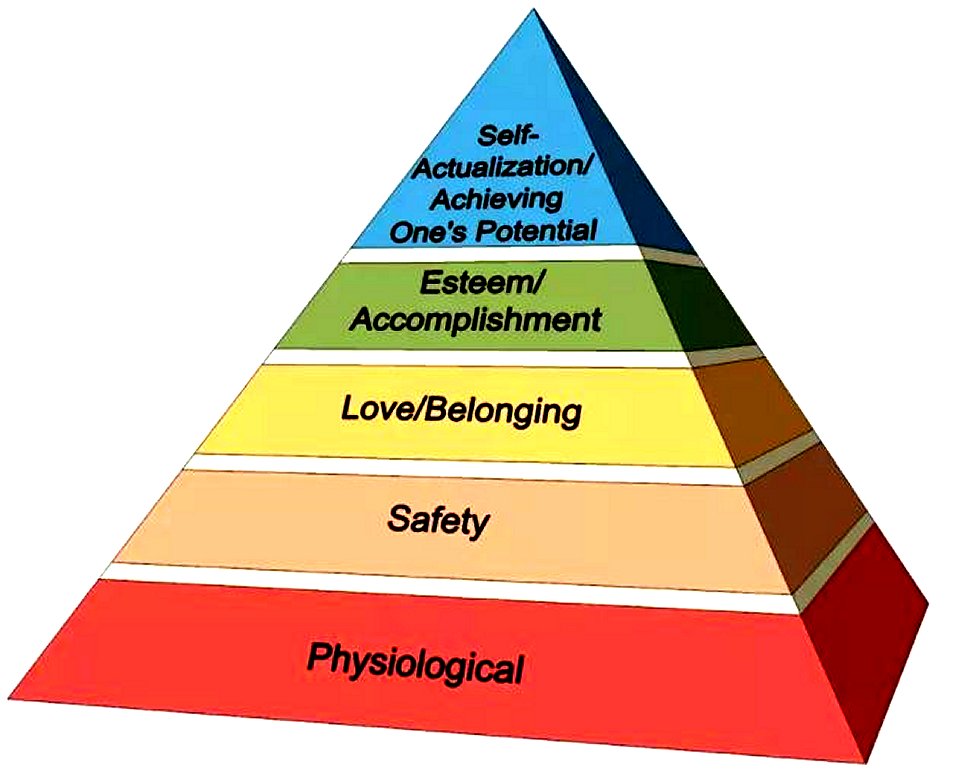
Maslow's hierarchy of needs is a theory of motivation which states that five categories of human needs dictate an individual's behavior.

In maslow's hierarchy of needs. In his essay “a theory of human motivation,” first published in 1943 in the academic journal psychological review and subsequently included in maslow’s book motivation and personality (1954), he defined a hierarchy of human needs which in his assertion motivate the behavior of all people.often represented as a pyramid, this. Within each level are specific needs that allow for an individual to feel fulfilled. The levels of hierarchy in maslow's need hierarchy theory appear in the shape of a pyramid, where the most basic need is placed at the bottom while the most advanced level of hierarchy is at the top of the pyramid.
This maslow's hierarchy of needs chart depicts maslow's hierarchy of needs. Maslow subsequently extended the idea to include his observations of humans' innate curiosity. The theory became very popular in many areas of subjects like science, management, sociology research, and psychology.
Abraham maslow's hierarchy of needs was an early and influential model in this field. Abraham harold maslow (/ ˈ m æ z l oʊ /; What is the hierarchy of needs?
Physiological (food and clothing), safety (job security), love and belonging needs (friendship),. A person’s actions will be focused around. It suggests that behaviors are by a series of increasingly complex needs.
As these needs does not arise due to lack of something, but a desire from within to grow as a person. Less immediate needs have to be met before more important needs can be satisfied. His theories parallel many other theories of human developmental psychology, some of which focus on d…
The hierarchy is often depicted as a pyramid to represent the need to fulfill the. This hierarchy, also referred to as maslow’s theory of motivation includes five levels of human needs. Achieving goals allows humans to meet their individual wants and needs.
Needs are mentally prioritized in order of importance (maslow, 1943). It helps to understand what people need and how the needs differs. This slightly clunky phrase simply means that humans want to feel that they are fulfilling their potential and making the most of their abilities.
The most basic level of maslow’s hierarchy of needs covers physiological needs. Needs lower down in the hierarchy must be satisfied before individuals can attend to needs higher up. It is an important part of effective management;
The physiological needs are regarded as the most basic of the needs that humans have. The five levels of the hierarchy of needs are: These are the things that we simply cannot live without:
Maslow’s hierarchy of needs has often been represented in a hierarchical pyramid with five levels. Maslow's hierarchy of needs is an idea in psychology proposed by american abraham maslow in his 1943 paper a theory of human motivation in the journal psychological review. Let us read in detail about the various steps in maslow’s hierarchy of needs theory.
The most basic needs make up the base and complex needs are found at the peak. At this end of the hierarchy, all the needs are ‘deficiency needs’. Maslow’s hierarchy of needs is a motivational theory in psychology.
Maslow was a psychology professor at brandeis university, brooklyn college,. The four above needs are literally the difference between living and dying. Maslow’s hierarchy of needs is displayed like a pyramid with the most fundamental need at the bottom, while the highest on.
If you didn’t do these things, you would die. The most basic level of maslow’s hierarchy of needs covers physiological needs. Maslow’s hierarchy of needs is a theory of human motivation.
Maslow’s hierarchy of needs is relevant to organizational theory due to the fact that the theory is concerned with human motivation. Air, food, drink, warmth, sleep and shelter. Human beings are motivated by goal accomplishment.
This is the lowest and most basic level of maslow's hierarchy. The hierarchy is usually depicted as a pyramid. Published in his 1943 article, a theory of human motivation, and made popular in his 1954 book, motivation and personality, it can still help us to support and motivate team members today!
The needs at the bottom of the pyramid are those which are very basic and the most complex needs are placed on the top of the pyramid.
What is the hierarchy of needs? His theories parallel many other theories of human developmental psychology, some of which focus on d…
/maslow-s-hierarchy-of-needs--scalable-vector-illustration-655400474-5c6a47f246e0fb000165cb0a.jpg)
Maslow's Hierarchy of Needs Explained
The most basic level of maslow’s hierarchy of needs covers physiological needs.
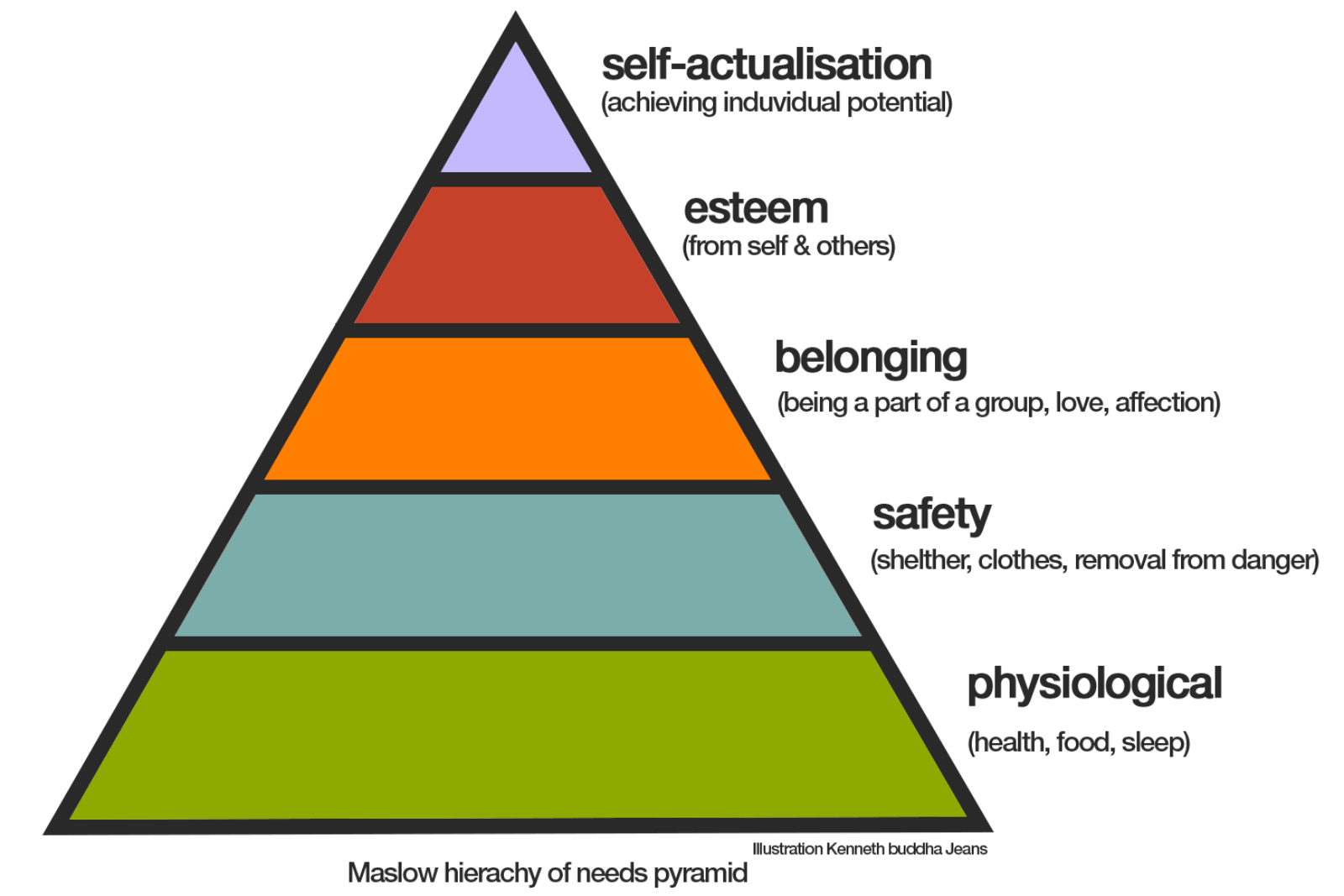
Maslows hierarchy of needs. Maslow’s hierarchy of needs is relevant to organizational theory because both are concerned with human motivation. Maslow's hierarchy of needs is an idea in psychology proposed by american abraham maslow in his 1943 paper a theory of human motivation in the journal psychological review. Moving from physical and tangible goods, these offer intangible things like connectivity and information.
Let us read in detail about the various steps in maslow’s hierarchy of needs theory. It suggests that behaviors are by a series of increasingly complex needs. The theory became very popular in many areas of subjects like science, management, sociology research, and psychology.
Understanding what people need—and how people’s needs differ—is an important part of effective management. It is an important part of effective management; The goods and services which were previously offered by businesses are also undergoing significant changes.
The five levels of the hierarchy of needs are: Maslow subsequently extended the idea to include his observations of humans' innate curiosity. The emphasis on abraham maslow’s hierarchy of needs is that there are certain basic needs which must be met before other needs can, indeed, be considered in human environment.
Maslow’s hierarchy of needs is displayed like a pyramid with the most fundamental need at the bottom, while the highest on. The most basic needs make up the base and complex needs are found at the peak. Maslow’s hierarchy of needs is relevant to organizational theory due to the fact that the theory is concerned with human motivation.
Maslow’s hierarchy of needs is illustrated here. The four above needs are literally the difference between living and dying. Maslow’s 7 hierarchy of needs has found much greater application in organisation and business settings.
Needs lower down in the hierarchy must be satisfied before individuals can attend to needs higher up. At the base of the pyramid are all of the physiological needs that are necessary for survival. Maslow's hierarchy of needs by saul mcleod, published may 21, 2018.
These are the things that we simply cannot live without: For instance, a wonderful job is worth nothing if base level physiological needs aren’t being met. The hierarchy is often depicted as a pyramid to represent the need to fulfill the.
Maslow’s hierarchy of needs is interconnected with each other and is constantly taking place one after the other. If you didn’t do these things, you would die. The physiological needs are regarded as the most basic of the needs that humans have.
In the hierarchy of needs, basic needs should be met first. At this end of the hierarchy, all the needs are ‘deficiency needs’. The needs at the bottom of the pyramid are those which are very basic and the most complex needs are placed on the top of the pyramid.
On the other hand, there can be problems like your students are hungry, which. In his essay “a theory of human motivation,” first published in 1943 in the academic journal psychological review and subsequently included in maslow’s book motivation and personality (1954), he defined a hierarchy of human needs which in his assertion motivate the behavior of all people.often represented as a pyramid, this. Maslow’s hierarchy of needs has often been represented in a hierarchical pyramid with five levels.
In 1954, maslow’s theory was fully explained in his book motivation and personality. Air, food, drink, warmth, sleep and shelter. This is the lowest and most basic level of maslow's hierarchy.
It helps to understand what people need and how the needs differs. Maslow’s hierarchy of needs is a theory of human motivation. For example, some people work primarily for money, but they also like to go to work because they enjoy feeling.
The focus of abraham maslow’s hierarchy of needs is now on motivation of people by seven (7) levels of needs in human environment. Within each level are specific needs that allow for an individual to feel fulfilled. A country’s ability to meet the basic needs of its people seems to more strongly predict how psychologically healthy its population is than whether the population’s more advanced needs are being met (diener, 1995;
The hierarchy is usually depicted as a pyramid. Maslow’s hierarchy of needs is a motivational theory in psychology. The most basic level of maslow’s hierarchy of needs covers physiological needs.
This hierarchy, also referred to as maslow’s theory of motivation includes five levels of human needs.