In his essay “a theory of human motivation,” first published in 1943 in the academic journal psychological review and subsequently included in maslow’s book motivation and personality (1954), he defined a hierarchy of human needs which in his assertion motivate the behavior of all people.often represented as a pyramid, this. The main goal of this need hierarchy theory is to attain the highest position or the last of the needs, i.e need for self actualization.
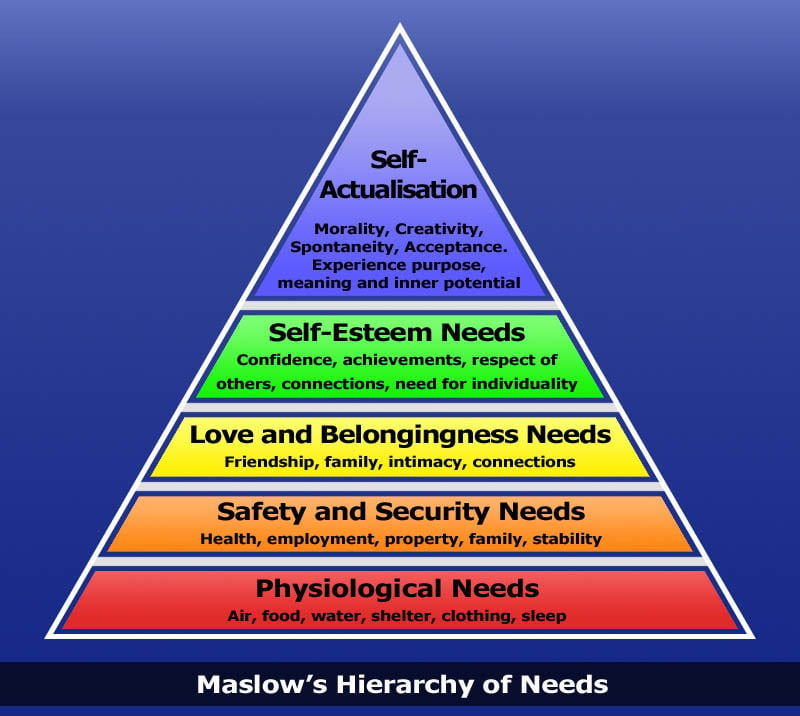
Abraham Maslow Hierarchy of Needs Genius
Hope and timmel (1995) note that in abraham maslow’s theory of needs that some needs are, indeed, more basic and more urgent than others.
Abraham maslow hierarchy of needs theory. It was first introduced by abraham maslow in 1943 for his paper titled theory of motivation and is based on a hierarchy of needs, which starts with the most basic needs and subsequently moves on to higher levels. He suggested that human beings have a hierarchy of needs. What is the hierarchy of needs?
Despite the now ancient date of publication, the theories of the american psychologist continue to be widely adopted as an explanation for human motivation and personality, embodied in the quest for goal. This is the lowest and most basic level of maslow's hierarchy. The four above needs are literally the difference between living and dying.
If you didn’t do these things, you would die. In 1951 he became head of psychology department. The hierarchy of needs theory of abraham maslow (1962) has had a considerable impact on classroom management and teaching.
Following these studies, maslow produced the hierarchy of needs, which consists of five distinct groups of needs: The theory of abraham maslow’s hierarchy of needs considers certain human needs as more basic and critical needs than some other needs in the society. This theory is based on the assumption that there is a hierarchy of five needs within each individual.
In the paper, maslow argued that “the fundamental desires of human beings are similar despite the multitude of conscious desires” (zalenski & raspa, 2006, p. It’s often shown as a triangle, or pyramid. He proposed this theory in a paper in psychological review entitled “a theory of human motivation”.
Further, he subsequently extended the concept by including the observation on human behaviour. Air, food, drink, warmth, sleep and shelter. Psychologist abraham maslow first developed his famous theory of individual development and motivation in the 1940’s.
At this end of the hierarchy, all the needs are ‘deficiency needs’. Abraham maslow’s theory of the hierarchy of needs was introduced in his groundbreaking 1943 paper “a theory of human motivation”. In a 1943 paper called a theory of human motivation, maslow presented the idea that human actions are directed toward goal attainment [1].any given behavior could satisfy several functions at the same time;
The most basic level of maslow’s hierarchy of needs covers physiological needs. Abraham maslow is well renowned for proposing the hierarchy of needs theory in 1943. These are the things that we simply cannot live without:
Maslow researched both 'exemplary people' from the past, such as albert einstein and eleanor roosevelt, and elite college students. The urgency of these needs varies. Maslow represented this theory as.
Maslow’s hierarchy of needs was proposed by a humanistic psychologist, abraham maslow in 1943. Maslow (1970a) takes a comprehensive perspective to education and learning, rather than restricting behaviour to a reaction to one’s surroundings. Published in his 1943 article, a theory of human motivation , and made popular in his 1954 book, motivation and personality, it can still help us to support and motivate team members today!
For instance, going to a. To meet specific human needs in the society. Maslow felt as though conditioning theories did not adequately capture the complexity of human behavior.
Abraham maslow’s theory is one of the earliest and most well know theories of motivation. Abraham maslow's hierarchy of needs was an early and influential model in this field. The hierarchy remains valid today for understanding human motivation.
This theory is a classical depiction of human motivation.
Employee motivation is important to boost productivity and foster a better working environment. Let’s walk through each level.
Employee engagement according to Maslow’s Pyramid of Needs Brighter

A ladder that, when climbed, brings fulfillment and.

Employee hierarchy of needs. Often represented visually in a pyramid shape, this theory states that we are first motivated by basic needs, which must be accomplished before pursuing more complex needs. The employees under this highest level of corporate employee hierarchy include: In the first two parts of this series, part 1:
Safety, or security needs, relate to a person’s need to feel safe and secure in their life and surroundings. In my most recent article, employee hierarchy of needs: If you don’t, you won’t achieve it.
Corporate leaders recognize the important role employee fulfillment plays in driving business success, and in recent years there’s been a strong focus on making workplaces collaborative, supportive and engaging. This hierarchy of needs can easily translate to the needs of an employee in terms of engagement. Their pyramid starts with satisfaction—the elements necessary for employees to feel safe, competent, and valued at.
There are many examples of safety needs in modern. Understand evolving employee needs through a psychological lens. A brief guide to maslow’s hierarchy of needs.
If you meet all their needs, that’s when we get to employee engagement. Part 1 of 3, basic needs, i described abraham maslow’s 1943 theory of human motivation and the idea of a hierarchy of needs. He proposed that humans have five tiers of needs:
If a job isn’t meeting their needs, employees join the group of 47.4 million americans who. There is a similar hierarchy of employee needs; The hierarchy of workplace needs.
Maslow’s hierarchy provides the basis for the kind of managerial thinking that focuses on financial rewards. This is the level that deals with the most basic of human needs: Employee’s hierarchy of needs, part 3 of 3:
Remember that maslow developed a view of human needs where people could move up levels only when the current level is satisfied. Maslow’s hierarchy of needs was developed by psychologist abraham maslow in 1943. Maslow's hierarchy of needs is a psychology theory posed by abraham maslow in his 1943 paper, “a theory of human motivation.” according to this theory, all people have needs that must be satisfied.
Maslow used a pyramid to describe and. In “engaging your employees is good, but don’t stop there,” bain & company partners eric garton and michael mankins take a page from maslow and divide the ambiguous concept of engagement into an employee hierarchy of needs. Physiological needs like food, water, and shelter;
The employee hierarchy of needs a key part of any college psychology 100 class is a brief study of maslow’s hierarchy of needs , which is certainly the most widely understood framework for describing human motivation. Here are the five levels in maslow's hierarchy of needs, and how you can apply them to the workplace to engage your employees. First, focus on the basics.
The idea of the employee hierarchy of needs is the same as maslow — you have to meet the lower level needs before you can expect them to work their way up the pyramid. The entire profit/loss responsibility of corporate is liability of these professionals. Just like individuals, employees have basic needs that, when met, motivate and fulfill.
Checkr and everee’s recent 2022 state of the worker report found that 1 in 5 workers plan to stay at their current job for less than a year. According to maslow, the needs must be addressed in the following order: Basic needs and part 2:
Psychological needs, i described abraham maslow’s 1943 theory of human motivation and the idea of a hierarchy of needs. Initially introduced in 1943, maslow's hierarchy of needs isn't just a psychological idea but. Motivation comes from the need for law, order, and protection from unpredictable and dangerous conditions.
The rationale is that financial rewards fulfils a fundamental need in the hierarchy and will therefore motivate staff. While there are different modern structures and. Time for a refresher course!
Maslow proposed the following as the basic needs for human survival and achievement: The second level of maslow’s hierarchy of needs consists of safety needs. The maslow’s hierarchy of needs for employee motivation.
Mulwa (2008) states that abraham maslow’s hierarchy of needs is built on the premise that human behaviour is motivated by the desire to meet specific human needs in the society. Maslow’s hierarchy of needs theory was first proposed by american psychologist abraham maslow in his 1943 paper a theory of human motivation.
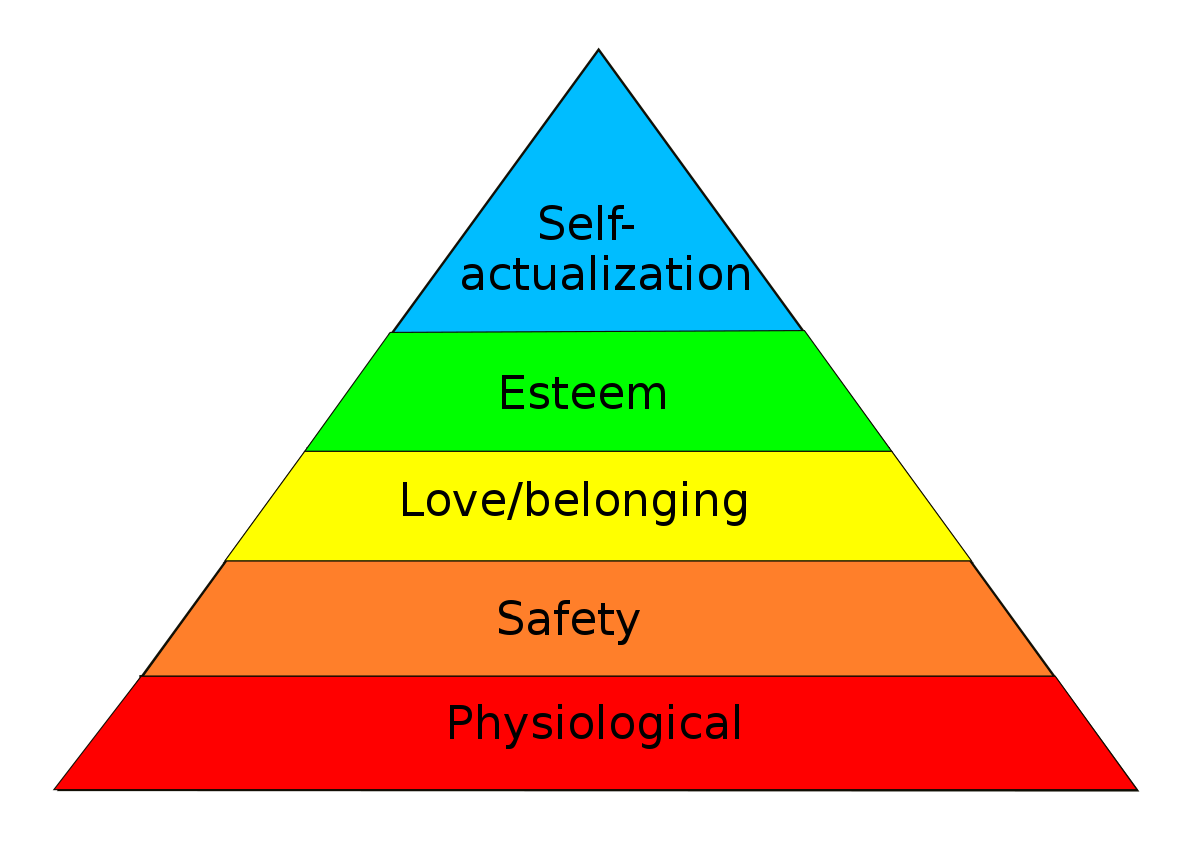
Maslow's hierarchy of needs Wikipedia
These basic needs are also called deficiency.

Theory of needs abraham maslow. Hierarki kebutuhan maslow adalah teori psikologi yang diperkenalkan oleh ablahnya, a theory of human motivation, di psychological review pada tahun 1943. Maslow’s hierarchy of needs theory is regarded as one of the most popular theories on motivation. According to maslow, these requirements can produce psychological forces that impact a person’s conduct.
A hierarchy is not rigid nor necessarily representative of human experience. Published in his 1943 article, a theory of human motivation , and made popular in his 1954 book, motivation and personality, it can still help us to support and motivate team members today! According to maslow’s hierarchy of needs, motivation is the consequence of a person’s attempt to satisfy five fundamental needs:
Abraham maslow is the founder and main figure in human psychology. This theory is based on the assumption that there is a hierarchy of five needs within each individual. Maslow organized these needs from the most urgent to the least urgent.
He suggested that human beings have a hierarchy of needs. In a 1943 paper called a theory of human motivation, maslow presented the idea that human actions are directed toward goal attainment [1].any given behavior could satisfy several functions at the same time; In this model, physiological needs precede psychological needs.
According to maslow, these needs can create internal pressures that can influence a. Maslow subsequently extended the idea to include his observations of humans' innate curiosity. • maslow's hier archy of needs.
Psychologist abraham maslow first developed his famous theory of individual development and motivation in the 1940’s. Physiologic al, such as food, wate r, and sleep; In the paper, maslow argued that “the fundamental desires of human beings are similar despite the multitude of conscious desires” (zalenski & raspa, 2006, p.
The urgency of these needs varies. Maslow felt as though conditioning theories did not adequately capture the complexity of human behavior. He organized his theory in this manner because according to maslow, our actions are.
It is a theory of psychology that explains that humans are highly motivated in order to fulfill their needs, which is based on hierarchical order. Maslow's hierarchy of needs theory maslow proposed that motivation is the result of a person's attempt at fulfilling five basic needs: In abraham maslow’s model, the level of need moves upwards as soon as the previous level of need is satisfied.
Maslow’s hierarchy of needs theory is a motivational theory that states that humans are motivated by a distinct set of needs placed on an upward trajectory. It was first introduced by abraham maslow in 1943 for his paper titled theory of motivation and is. His theories parallel many other theories of human developmental psychology, some of which.
Maslow placed these needs into five. Maslow represented this theory as. For instance, going to a.
Psychology, motivation and human needs. Abraham maslow hierarchy of needs maslow’s hierarchy of needs is used to study how humans intrinsically partake in behavioural motivation. This hierarchy suggests that people are motivated to fulfill basic needs before moving on to other, more advanced needs.
Abraham maslow is well renowned for proposing the hierarchy of needs theory in 1943. Abraham maslow's hierarchy of needs was an early and influential model in this field. Maslow's hierarchy of needs is an idea in psychology proposed by american abraham maslow in his 1943 paper a theory of human motivation in the journal psychological review.
Maslow’s needs hierarchy this is a motivation theory that begins (in this rendering) at the trunk of the tree where the viewer encounters the most basic physical needs that motivate people according to abraham maslow (1943).then if security, then belonging, then esteem needs are met in sequential order, a person can reach the top stage of self. Basic needs and meta needs. This theory is a classical depiction of human motivation.
The theory of abraham maslow’s hierarchy of needs considers certain human needs as more basic and critical needs than some other He created the hierarchy of human needs, which he based on the existence of a series of needs that concern every individual. Abraham maslow first introduced the concept of a hierarchy of needs in his 1943 paper titled a theory of human motivation, and again in his subsequent book, motivation and personality.
Maslow’s hierarchy has stood up remarkably well given its over seventy years old and was developed. The levels of maslow’s hierarchy of needs 1.

Maslow's Hierarchy of Needs Master Chau Do's official website
This is the lowest and most basic level of maslow's hierarchy.

Maslow's hierarchy of needs levels. Maslow’s hierarchy of needs is a theory of human motivation. It suggests that behaviors are by a series of increasingly complex needs. According to maslow, we have five categories of needs:
Human needs favor obeying a primary hierarchal pattern from the most essential needs to the highest level. The most fundamental requirements are found at the bottom of the pyramid, while the most complicated demands are found at the top. Although later research does not fully support all of.
If you didn’t do these things, you would die. The most basic needs make up the base and complex needs are found at the peak. Maslow's hierarchy of needs is an idea in psychology proposed by american abraham maslow in his 1943 paper a theory of human motivation in the journal psychological review.
These needs and the first three levels complete the deficiency needs. Reputation, promotion, being seen as an inspiration, and becoming an influence. Anything that makes you feel unsafe means this need is not met.
All these four needs are required to match the fundamental requirement of a human being. The hierarchy is often depicted as a pyramid to represent the need to fulfill the. The 5 levels in the maslow’s hierarchy of needs are:
In his initial paper and a subsequent 1954 book titled motivation and personality, maslow proposed that five core needs form the basis for human behavioral. Basic bodily necessities, such as the need for food, drink, sleep, and warmth, lie at the bottom of the. The basis of this need could be “what a man can be, he must be.”.
Thus many different motivations from various levels of maslow's hierarchy can occur at the same time. Spread the lovemaslow’s hierarchy of needs is one of the most familiar theories of motivation. Level 1 our basic needs.
It establishes that people have a hierarchy of needs that they will satisfy from the bottom up, starting from mere physiological subsistence. The most basic level of maslow’s hierarchy of. The most common representation of maslow's hierarchy is a pyramid.
According to abraham maslow, the hierarchy creator, our actions are motivated to achieve particular needs. Both levels are essential to human existence and must be met to live at a basic level of. This theory further states that the most basic level of need strengthens the desire in human personality.
Unless the most basic needs are fulfilled, a person will not. All five preceding levels involve the. In this theory, higher needs in the hierarchy begin to emerge when people feel they have sufficiently satisfied the previous need.
A portion of the things that fulfill this need include: Within each level are specific needs that allow for an individual to feel fulfilled. This level refers to the realization of one’s full potential.
Reaching and realizing one’s full potential in terms of talent and skills. The hierarchy is usually depicted as a pyramid. Maslow believed that these needs are the most basic and instinctive needs in the hierarchy because all needs become secondary until these.
Esteem needs to be met by others. The five levels of the hierarchy of needs are: Yet so much of the literature on the subject overlooks this addition.
These include the most basic needs that are vital to survival, such as the need for water, air, food, and sleep. Maslow’s hierarchy of needs has often been represented in a hierarchical pyramid with five levels. Maslow spoke clearly about these levels and their satisfaction in.
Level 2 our basic needs. 5 levels of maslow’s hierarchy of needs. It means the desire to do everything that one can, to become the most one can be.
There are five different levels in maslow’s hierarchy of needs: Safety needs come just behind. This hierarchy, also referred to as maslow’s theory of motivation includes five levels of human needs.
The four above needs are literally the difference between living and dying. Maslow’s hierarchy of needs is a motivational theory in psychology that includes a model of five levels of human needs, often represented as hierarchical levels inside a pyramid. However, if these ultimate goals are to be achieved,.
Maslow’s hierarchy of needs is a motivational theory in psychology.
What is the hierarchy of needs? His theories parallel many other theories of human developmental psychology, some of which focus on d…
/maslow-s-hierarchy-of-needs--scalable-vector-illustration-655400474-5c6a47f246e0fb000165cb0a.jpg)
Maslow's Hierarchy of Needs Explained
The most basic level of maslow’s hierarchy of needs covers physiological needs.
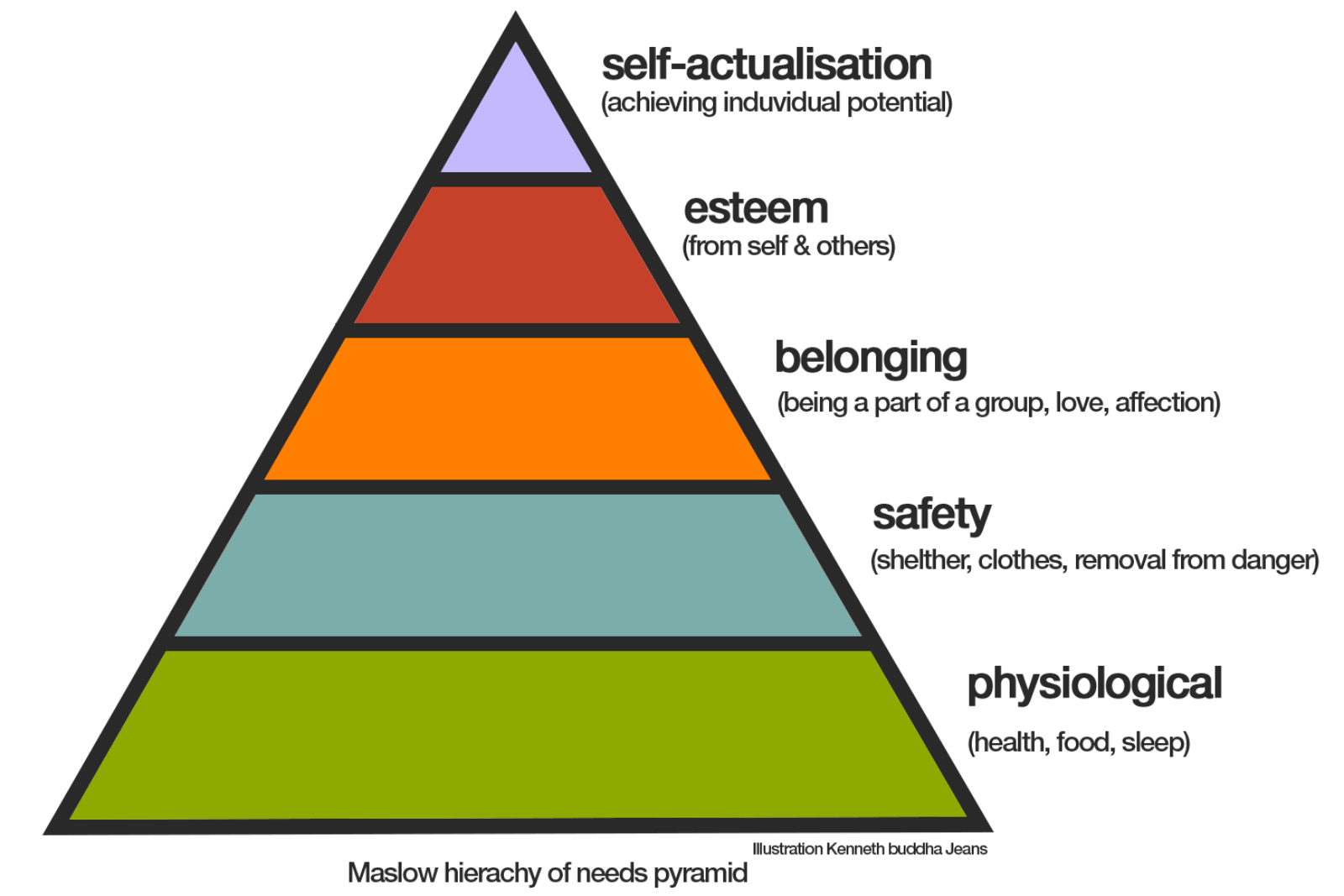
Maslows hierarchy of needs. Maslow’s hierarchy of needs is relevant to organizational theory because both are concerned with human motivation. Maslow's hierarchy of needs is an idea in psychology proposed by american abraham maslow in his 1943 paper a theory of human motivation in the journal psychological review. Moving from physical and tangible goods, these offer intangible things like connectivity and information.
Let us read in detail about the various steps in maslow’s hierarchy of needs theory. It suggests that behaviors are by a series of increasingly complex needs. The theory became very popular in many areas of subjects like science, management, sociology research, and psychology.
Understanding what people need—and how people’s needs differ—is an important part of effective management. It is an important part of effective management; The goods and services which were previously offered by businesses are also undergoing significant changes.
The five levels of the hierarchy of needs are: Maslow subsequently extended the idea to include his observations of humans' innate curiosity. The emphasis on abraham maslow’s hierarchy of needs is that there are certain basic needs which must be met before other needs can, indeed, be considered in human environment.
Maslow’s hierarchy of needs is displayed like a pyramid with the most fundamental need at the bottom, while the highest on. The most basic needs make up the base and complex needs are found at the peak. Maslow’s hierarchy of needs is relevant to organizational theory due to the fact that the theory is concerned with human motivation.
Maslow’s hierarchy of needs is illustrated here. The four above needs are literally the difference between living and dying. Maslow’s 7 hierarchy of needs has found much greater application in organisation and business settings.
Needs lower down in the hierarchy must be satisfied before individuals can attend to needs higher up. At the base of the pyramid are all of the physiological needs that are necessary for survival. Maslow's hierarchy of needs by saul mcleod, published may 21, 2018.
These are the things that we simply cannot live without: For instance, a wonderful job is worth nothing if base level physiological needs aren’t being met. The hierarchy is often depicted as a pyramid to represent the need to fulfill the.
Maslow’s hierarchy of needs is interconnected with each other and is constantly taking place one after the other. If you didn’t do these things, you would die. The physiological needs are regarded as the most basic of the needs that humans have.
In the hierarchy of needs, basic needs should be met first. At this end of the hierarchy, all the needs are ‘deficiency needs’. The needs at the bottom of the pyramid are those which are very basic and the most complex needs are placed on the top of the pyramid.
On the other hand, there can be problems like your students are hungry, which. In his essay “a theory of human motivation,” first published in 1943 in the academic journal psychological review and subsequently included in maslow’s book motivation and personality (1954), he defined a hierarchy of human needs which in his assertion motivate the behavior of all people.often represented as a pyramid, this. Maslow’s hierarchy of needs has often been represented in a hierarchical pyramid with five levels.
In 1954, maslow’s theory was fully explained in his book motivation and personality. Air, food, drink, warmth, sleep and shelter. This is the lowest and most basic level of maslow's hierarchy.
It helps to understand what people need and how the needs differs. Maslow’s hierarchy of needs is a theory of human motivation. For example, some people work primarily for money, but they also like to go to work because they enjoy feeling.
The focus of abraham maslow’s hierarchy of needs is now on motivation of people by seven (7) levels of needs in human environment. Within each level are specific needs that allow for an individual to feel fulfilled. A country’s ability to meet the basic needs of its people seems to more strongly predict how psychologically healthy its population is than whether the population’s more advanced needs are being met (diener, 1995;
The hierarchy is usually depicted as a pyramid. Maslow’s hierarchy of needs is a motivational theory in psychology. The most basic level of maslow’s hierarchy of needs covers physiological needs.
This hierarchy, also referred to as maslow’s theory of motivation includes five levels of human needs.