In a class, pragmatists can be very useful to help others focus and effectively implement a plan. Honey and mumford based their work on david kolb's research on the learning.
Simple Business Guru What Is A Pragmatist Learning Style
A pragmatist prefers to have the opportunity to experiment and would like to tear everything apart and repair it once again, to see how it works.
What is a pragmatist learning style. A utilitarian is someone who values things that are useful. A learning path must be manageable with a clear purpose, and the processes must not come on hold, or. The honey and mumford learning styles are created according to a child’s supposed preference to learning.
They called these activist, theorist, reflector and pragmatist, sports coach brian mac explains on his website. The pragmatist is a businesslike and logical learner who puts tasks and techniques into practice. By using a learning style questionnaire, they help people identify which learning type best suits them and.
Their confidence will help analysts move from reflection to action and will tone down the theoreticians’ need for perfection. Pragmatist study styles include case studies and time to think about the practical applications of what you are learning. They will execute, coordinate, allocate tasks and monitor the process until the activity has been completed.
Pragmatists are keen on trying out ideas, theories and techniques to see if they work in practice. What is a pragmatist learning style ? Theorist learning involves models and theories, with plenty of background information.
Education researchers peter honey and alan mumford used responses from a learning style questionnaire to identify four typical learning styles. Two researchers (peter honey and alan mumford) who adapted kolb’s experiential learning model, managed to identify four main learner types as activist, reflector, pragmatist and theorist of which all learners will hold strong traits for. Pragmatist study styles include case studies and time to think about the practical applications of what you are learning.
Supporters of learning based on these styles offer that a child’s learning is maximized if said child and parents, seek to understand the. They positively search out new ideas and take the first opportunity to experiment with applications. Honey and mumford’s learning styles model identifies four different styles that people use to learn something new:
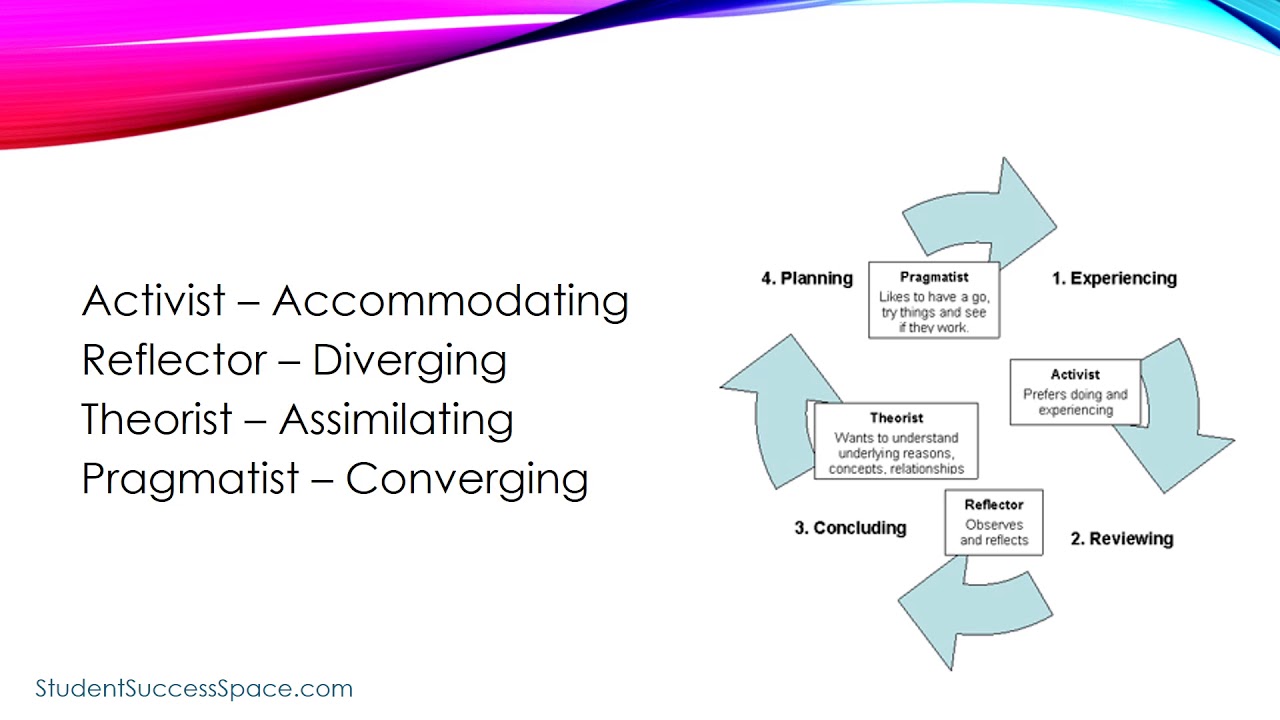
Pragmatist study styles include case studies and time to think about the practical applications of what you are learning. If you are familiar with kolb’s learning cycle, then you might have spotted that the honey and mumford learning styles are based heavily on that model. In this model mumford and honey describe the learning styles as a continuum that one moves through over time.
The four different ways in which people prefer to learn that honey and mumford have identified, relate to a different stage in the learning cycle. Click to see full answer. These advantages are offset by some disadvantages.
They are the sort of people who return from courses brimming with new ideas that they want to try out. Individually, a learning style is a set of preferences based on cognitive, emotional, and environmental factors. The styles postulate that a child is naturally an activist, theorist, pragmatist, or reflector.
Learning styles, as an umbrella term, refer to a series of theories that have tried to categorize and define the specifics of these different approaches. Some people (like idealists and absolutists) believe that the facts never change. As you can see from the diagram.
Key ideas in pragmatic education theory 1. Those who prefer this learning style are the sort of people who return from management courses brimming with. If knowledge is not useful.
Pragmatists are keen on trying out new ideas, theories and techniques to see if they work in practice. They become confused by or tend to disregard theories or ideas with no obvious or immediate application. Their learning style, like their work ethic, is quick and efficient.
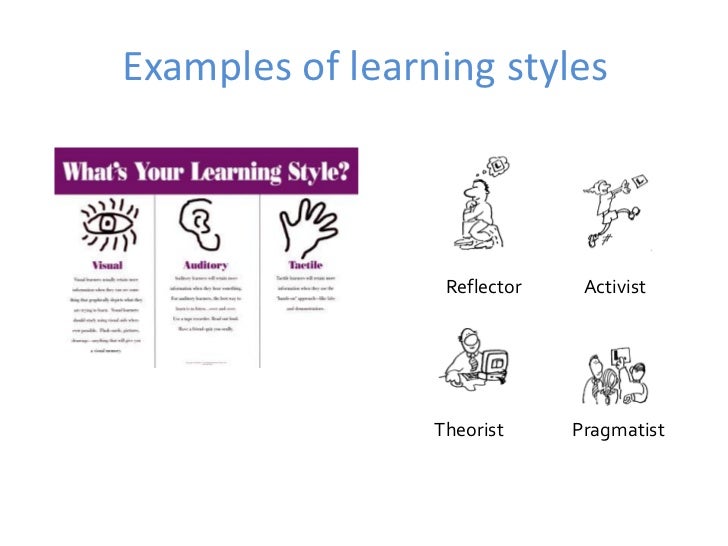
These are activist, reflector, theorist and pragmatist. They positively search out new ideas and take the first opportunity to experiment with applications. Theorist learning involves models and theories, with plenty of background information.