Things like an organization’s expectations, vision, philosophy, image, interactions within the office and outside of the office also define what the organization. We’re all in this together. adhocracy culture.
Collective Edge Coaching Organization Culture
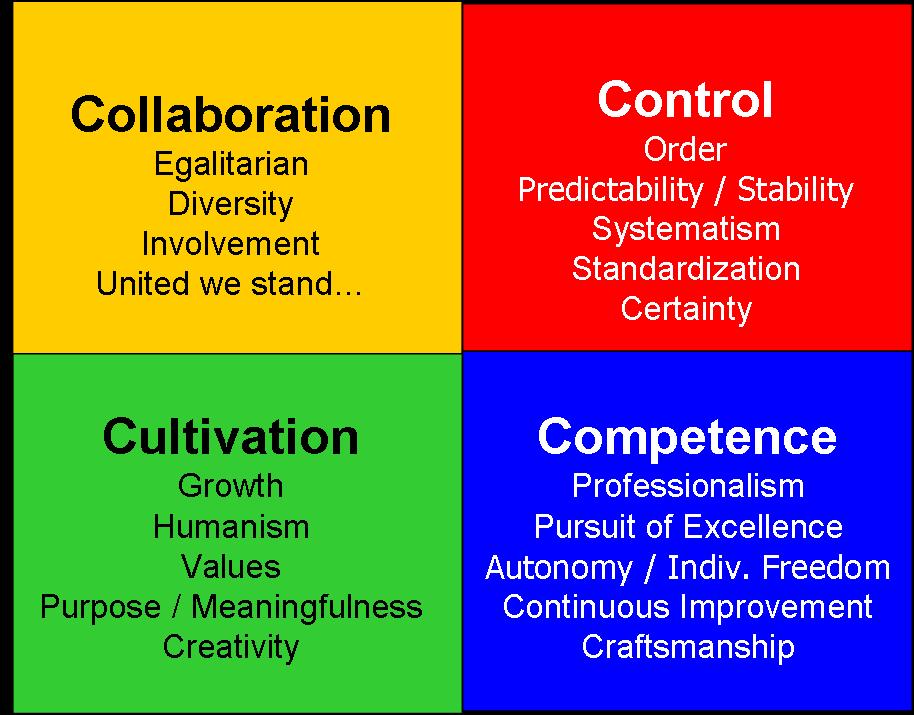
Let’s have a look at each organizational culture type and how to develop them in more detail.

Main types of organisational culture. Although many facets of corporate culture exist, it's possible to group them into four main culture types, according to research conducted by quinn et al., over the past few decades. Check out how to define your organizational culture and learn more with some examples to follow! The most aggressive of the organizational culture types.
Expect a workplace driven by targets, deadlines and the need to get results, with staff performance closely monitored. The first type of culture to consider is clan culture. In other words, clan culture can be one of the more collaborative types of organizational culture you’ll find.
Typically, with more security, companies are able to favor internal growth. This is an atmosphere in which every employee is. Focusing on what other companies are doing, trends, and the market.
Does your organization have internal orientation: Engaged employees are more productive in their work, which has a direct impact on the company’s bottom line. Charles handy’s types of organisational culture power culture role culture power culture is associated with autocratic leadership.
The culture of caring an environment built on mutual trust and support. In simple terms, organizational culture is a system of shared assumptions, values, beliefs, and norms that governs how an organization’s employees behave in the. For this reason, the definition must be objective and strategic.
Focusing on collaboration, innovation, and coordination, or external orientation: It defines and creates a unique environment to work in. Power is concentrated in the centre of the organisation.
Clans and hierarchies obsess over employees and internal. They are more likely to support and encourage employees to take the initiative to do things on their own. The organizational culture influences the achievement of a brand's growth and interpersonal relationships among all those involved with it, such as employees, suppliers and customers.
Decisions can be made quickly as so few people are involved in making them. Organizational culture is a powerful system of shared norms and attitudes that works as a homogenizing factor for an organization’s employees and gets appropriated by them. These companies want to see the numbers, they want to win, and they want to get results.
A collaborative workplace in which teamwork. This culture is driven by outcomes, and it works tirelessly to penetrate the market and gain the most market share possible. Managers are judged by results rather than
Organizational culture is a system of shared assumptions, values, and beliefs, which govern how people behave in organizations. Organizational culture is the set of underlying beliefs, values, principles, and ways of interacting within an organization. Although organizational cultures vary, most can be summed up by a few different categories.
8 reasons why organizational culture is important. Types of organisational culture 1. One component often found together with.
The focus of this culture are: A healthy corporate culture makes employees feel that their contributions are valued. Most activities and decisions are dictated by existing procedures, rather than a lot of innovation and freethinking.
This culture is especially prevalent in larger organizations, where executives are tenacious, forceful, and have high expectations from their employees. The culture of authority the flip side of the culture of caring? Companies with these types of organizational cultures embrace change and unique ideas.
Workplace environments usually fit into a quadrant that emphasizes these different workplace ideals: Companies with good corporate cultures have higher employee engagement ratings. With any volatility in the market, companies are forced to closely.